
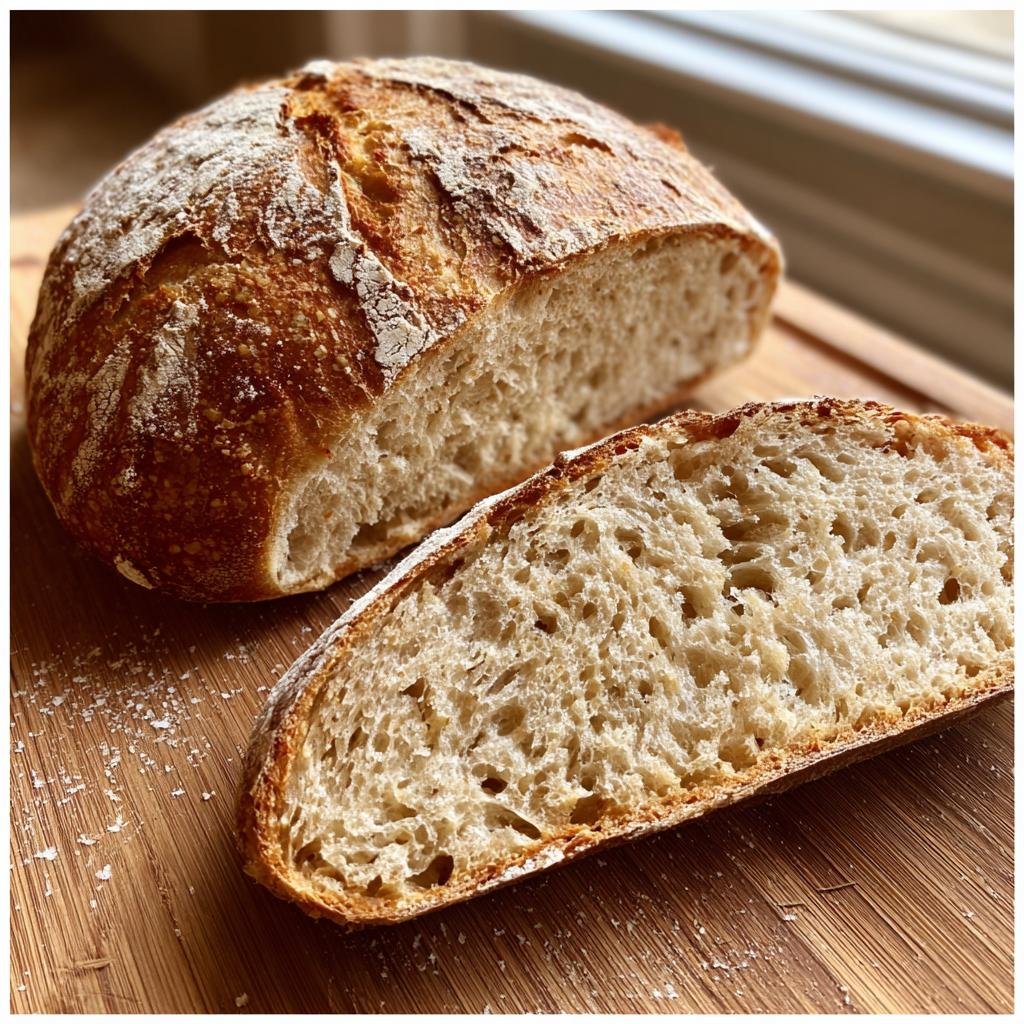
You know that feeling when you pull a loaf of bread from the oven and it smells like everything good in the world? That’s exactly what happens with this Healthy Einkorn Sourdough (Ancestral Method). I fell in love with this recipe years ago when I discovered how much better my stomach felt eating einkorn flour—it’s gentler on digestion but still packs that rich, tangy sourdough flavor we all crave.
What makes this method special? It’s simple, honest baking the way our great-grandparents did it—no fancy gadgets, no rushed timelines. Just flour, water, salt, and a bubbly sourdough starter working their magic together. The slow fermentation gives the bread its incredible depth of flavor while making the nutrients more bioavailable. And trust me, once you taste that first slice with its crackly crust and soft, slightly nutty crumb, you’ll understand why I make this loaf every single week.
This isn’t just bread—it’s a connection to tradition, to nourishment, and to the kind of cooking that feels like a warm hug. Let’s bake some magic together!
Why You’ll Love This Healthy Einkorn Sourdough (Ancestral Method)
Oh, where do I even start? This bread isn’t just food—it’s a game-changer. Here’s why you’ll be obsessed:
- Easy on the belly: Einkorn’s simpler gluten structure makes this loaf way gentler on sensitive stomachs than modern wheat. No more post-sandwich bloat!
- Flavor for days: That slow fermentation develops this incredible tangy depth—like your favorite sourdough but with a subtly sweet, nutty twist from the einkorn.
- Ancestral magic: We’re using the same methods bakers did centuries ago—long fermentation, hand mixing, natural leavening. It’s bread the way nature intended.
- Crust that sings: That first crack when you break into the loaf? Pure bakery-worthy perfection with a tender, airy crumb inside.
- Weekly staple potential: Once you nail this (and you will!), you’ll want to bake it every Sunday. It freezes beautifully too!
Seriously, this bread checks all the boxes—healthier, tastier, and oh-so-rewarding to make. Your kitchen (and your gut) will thank you.
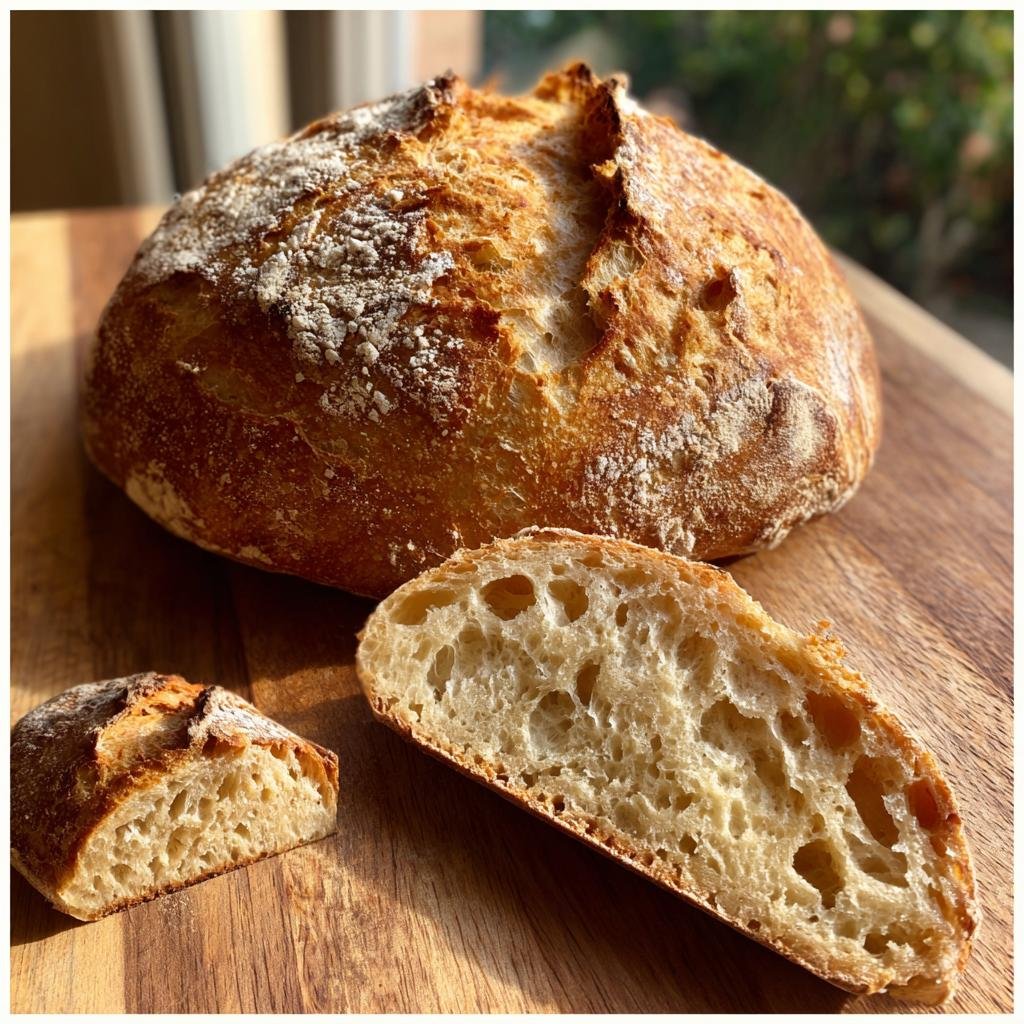
Ingredients for Healthy Einkorn Sourdough (Ancestral Method)
Here’s the beautiful part—you only need four simple ingredients to make magic happen. But quality matters, so let’s get specific:
- 500g einkorn flour (whole grain preferred for that nutty depth, but all-purpose einkorn works too)
- 350g water (filtered if your tap water is heavily chlorinated—your starter will thank you)
- 10g salt (fine sea salt dissolves best, but any non-iodized salt will do)
100g active sourdough starter (fed 4-12 hours earlier—it should be bubbly and pass the float test)
See? Nothing fancy—just real ingredients doing real work. Now grab your scale (trust me, weighing is key here) and let’s get mixing!
How to Make Healthy Einkorn Sourdough (Ancestral Method)
Alright, let’s roll up our sleeves and dive into the good stuff! This process is like a slow dance—patience is key, but oh, the payoff is worth it. Follow these steps, and you’ll have a loaf that’ll make you feel like a bread wizard.
Mixing and Autolyse
First, grab your biggest bowl and mix the einkorn flour and water until just combined—no dry spots! Don’t worry about kneading yet. Cover it with a damp towel and let it rest for 30 minutes. This autolyse period lets the flour hydrate fully, giving you a smoother dough later. You’ll notice it relax and become more elastic—like magic!
Adding Starter and Salt
Time to wake up that dough! Add your bubbly starter and salt to the bowl. Now, get your hands in there—it’s messy but fun! Squish, fold, and turn the dough for about 5 minutes until everything is evenly mixed. Einkorn dough is stickier than regular wheat, so don’t panic. You’re aiming for a shaggy, slightly tacky ball that holds together when you pull it.
Bulk Fermentation and Folding
Here’s where patience comes in. Let the dough rise at room temperature (around 70°F/21°C) for 4-6 hours. Every hour, give it a quick fold: Wet your hands, grab one side of the dough, stretch it up, and fold it over. Rotate the bowl and repeat 3-4 times. These folds build strength without overworking the dough. Watch for bubbles and a 50% increase in volume—that’s your cue it’s ready!
Shaping and Final Proof
Dust your counter lightly with flour and gently turn out the dough. Shape it into a round or oval—no need to be perfect! Place it seam-side up in a floured proofing basket (or a bowl lined with a floured towel). Now, choose your path: Let it proof at room temp for 2-3 hours until slightly puffy, OR for deeper flavor, pop it in the fridge overnight (up to 12 hours). Cold proofing = next-level taste!
Baking the Healthy Einkorn Sourdough
Preheat your oven to 475°F (245°C) with a Dutch oven inside for at least 30 minutes—this mimics a professional oven’s steam. Carefully transfer your dough to the scorching-hot Dutch oven (seam-side down now!), slash the top with a razor, cover, and bake for 30 minutes. Then, uncover and bake 15 more minutes until the crust is deep golden and sounds hollow when tapped. Resist slicing for at least an hour—I know, torture!—but that wait ensures the crumb sets perfectly.
Tips for Perfect Healthy Einkorn Sourdough (Ancestral Method)
After countless loaves (and a few hilarious failures), here are my golden rules for einkorn sourdough success:
- Starter vitality is everything: If your starter isn’t doubling within 4-6 hours after feeding, give it another feeding before baking. A sleepy starter makes sad bread!
- Embrace the sticky: Einkorn dough will never feel as smooth as regular wheat—it’s naturally tackier. Wet your hands instead of adding more flour during folds.
- Temperature matters: If your kitchen is cold (below 68°F/20°C), extend bulk fermentation by 1-2 hours. Too warm? Check dough hourly—einkorn ferments faster than you’d expect.
- Flour adjustments: Whole grain einkorn absorbs more water. Start with 330g and add the last 20g only if needed during mixing.
- The overnight secret: That fridge proof isn’t just convenient—it develops incredible flavor. My best loaves always cold-proof for 10-12 hours.
Remember, sourdough is a living thing—each bake teaches you something new. Don’t stress perfection. Some of my most “imperfect” loaves tasted the best!
Ingredient Substitutions and Notes
Okay, let’s talk swaps because I know we don’t all have the same pantry! First, that filtered water? If your tap water tastes fine, use it—just avoid heavily chlorinated water that might bother your starter. Don’t have whole grain einkorn? All-purpose einkorn works beautifully—the crumb will be slightly lighter. In a pinch, you can substitute up to 25% regular whole wheat flour, but expect stickier dough. And salt? Any fine, non-iodized salt works—just avoid coarse varieties that might not dissolve evenly. The beauty is in the flexibility!
Storing and Reheating Healthy Einkorn Sourdough
Here’s my foolproof system for keeping that glorious loaf fresh: Once completely cool, store it cut-side down on a wooden board for day one (that crust stays crisp!). After that, wrap it in a clean kitchen towel or beeswax wrap—never plastic, or it’ll get soggy! For longer storage, slice and freeze for up to 3 months. To reheat, pop slices straight into the toaster or warm the whole loaf in a 350°F (175°C) oven for 10 minutes—it’ll taste freshly baked all over again!
Nutritional Information
Let’s chat about what’s inside this beautiful loaf! Per slice (about 50g), you’re looking at roughly 120 calories, 4g protein, and 2g fiber—pretty great for something that tastes this indulgent! Remember, estimates vary based on ingredients, but einkorn’s natural goodness means more nutrients your body can actually use. That’s what I call smart baking!
Frequently Asked Questions
I’ve gotten so many great questions about this bread over the years—here are the ones that pop up most often:
Can I use regular flour instead of einkorn?
You can, but it won’t be the same! Regular wheat absorbs water differently and has more gluten. If you must substitute, try 25% whole wheat with 75% bread flour, and reduce water by 10%—but really, einkorn’s the star here!
Why is my dough so sticky?
Welcome to einkorn baking, friend! This ancient grain is naturally stickier than modern wheat. Resist adding extra flour—wet hands are your secret weapon for handling it. That tackiness gives the bread its amazing moisture!
My loaf didn’t rise much—what went wrong?
Usually it’s one of three things: starter wasn’t active enough (do the float test!), room was too cold (try proofing near your oven), or you rushed bulk fermentation. Einkorn needs those full 4-6 hours to work its magic!
Can I make this without a Dutch oven?
Absolutely! Use a baking stone or steel with a steam pan underneath for the first 20 minutes. The key is creating that steamy environment for oven spring.
Share Your Healthy Einkorn Sourdough (Ancestral Method)
I can’t wait to see your beautiful loaves! Tag me @einkornbaker when you post your sourdough—I love celebrating your baking wins and answering any questions. Happy baking, friends!
Print
3 Reasons This Healthy Einkorn Sourdough Recipe is Magical
- Total Time: 7 hours 15 minutes
- Yield: 1 loaf
- Diet: Vegetarian
Description
A simple and healthy sourdough bread made with einkorn flour using the ancestral method.
Ingredients
- 500g einkorn flour
- 350g water
- 100g active sourdough starter
- 10g salt
Instructions
- Mix flour and water in a bowl. Let it rest for 30 minutes.
- Add sourdough starter and salt. Knead well.
- Let the dough rise for 4-6 hours, folding every hour.
- Shape the dough and place it in a proofing basket.
- Proof for 2-3 hours or refrigerate overnight.
- Preheat oven to 475°F (245°C) with a Dutch oven.
- Bake covered for 30 minutes, then uncovered for 15 minutes.
Notes
- Use fresh sourdough starter for best results.
- Adjust water slightly based on flour absorption.
- Longer fermentation enhances flavor.
- Prep Time: 30 minutes
- Cook Time: 45 minutes
- Category: Bread
- Method: Baking
- Cuisine: European