
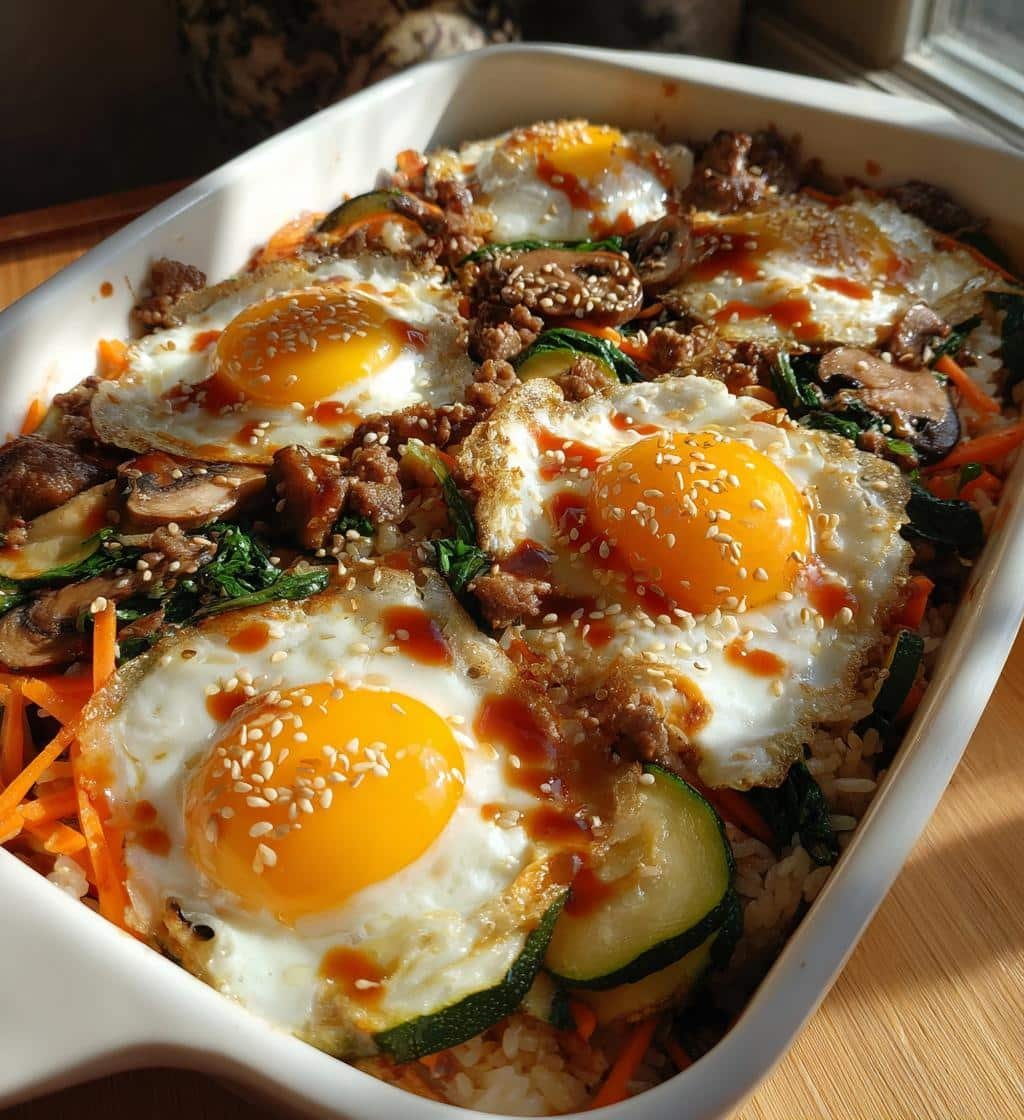
I’ll never forget my first bite of bibimbap at that tiny Korean spot around the corner from my old apartment. The colorful veggies, that spicy-sweet gochujang, and the way the runny egg yolk mixed into the rice—wow, it was love at first taste. But let’s be real: on busy weeknights, I don’t have time to wash seven different pans just to recreate that magic. That’s when I started playing around with sheet pan versions, and friends, this Healthy Sheet Pan Bibimbap Casserole is my proudest kitchen hack yet. All the bold flavors you crave, but with just one pan to clean (seriously, even the protein cooks right on top!). It’s become my go-to when I need something nourishing but don’t want to sacrifice flavor—or my sanity. The best part? You probably have most ingredients already waiting in your fridge.
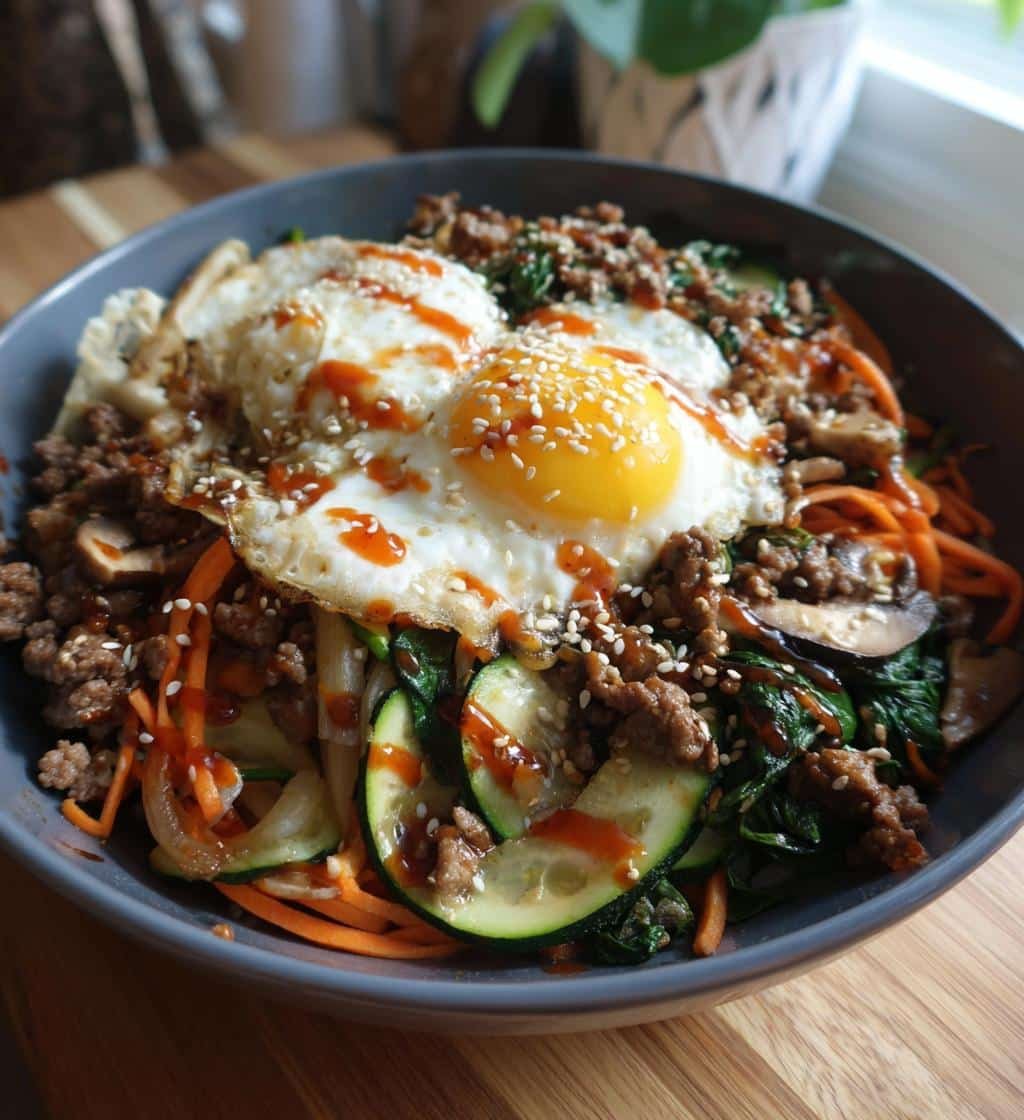
Why You’ll Love This Healthy Sheet Pan Bibimbap Casserole
Trust me, this isn’t just another “healthy” recipe that leaves you hungry—it’s packed with flavor and so easy you’ll want to make it weekly. Here’s why it’s my weeknight hero:
- One-pan wonder: No juggling skillets or mountains of dishes. Just toss everything on a sheet pan and let the oven do the work while you kick your feet up.
- Customizable cravings: Swap beef for shrimp, add extra gochujang if you like it spicy, or pile on whatever veggies are wilting in your fridge. It’s forgiving like that.
- Actually satisfying: Brown rice keeps it wholesome, but that glossy egg yolk and sesame oil? Pure comfort food magic that won’t leave you raiding the snack drawer an hour later.
It’s the kind of meal that makes you feel like you’ve got your life together—even when you really don’t.
Ingredients for Healthy Sheet Pan Bibimbap Casserole
Here’s the beauty of this recipe – you likely have most of these ingredients already! But let me tell you exactly what makes my version sing:
- 2 cups cooked brown rice – Day-old rice works best here! If you’re in a pinch, cook fresh rice but spread it thin on the pan so it crisps up nicely.
- 1 cup carrots, julienned (about 2 medium) – I swear by the matchstick cut – not too thick, not too thin. That perfect crunch is everything.
- 1 cup zucchini, julienned – Yellow squash works great too if that’s what’s in season.
- 1 cup spinach, chopped – Kale or Swiss chard make sturdy substitutes if you prefer.
- 1 cup mushrooms, sliced – Any variety you like! I’m partial to shiitakes for their meaty texture.
- 1 cup lean ground beef – Or for my vegetarian friends: crumbled extra-firm tofu (patted dry!) or tempeh works beautifully.
- 2 tbsp soy sauce – Low-sodium if you’re watching salt, but don’t skip this flavor bomb.
- 1 tbsp sesame oil – That toasty, nutty aroma is non-negotiable in my book.
- 1 tbsp gochujang – Start with less if you’re spice-shy – you can always add more after baking!
- 2 eggs (optional) – Because that runny yolk mixing into the rice? Chef’s kiss.
- 1 tbsp sesame seeds – For that perfect finishing crunch.
See? Nothing fancy – just good, honest ingredients that come together into something magical.
How to Make Healthy Sheet Pan Bibimbap Casserole
Don’t let the fancy name fool you – this comes together easier than most weeknight pasta dishes! Just follow these simple steps for perfect results every time. (Psst…I’ve included all my little “aha!” moments from making this dozens of times.)
Step 1: Prep the Rice and Vegetables
First, crank your oven to 400°F (200°C) – getting it nice and hot ensures our veggies get those delicious caramelized edges. Grab your biggest sheet pan (I use a standard half-sheet) and spread the cooked rice in an even layer, pressing gently with your fingers. This creates the perfect base for everything else.
Now, artfully arrange those julienned carrots and zucchini – I like to keep colors alternating because it looks pretty, but honestly, just dump them on if you’re in a rush! The spinach goes on next (trust me, putting it under the protein prevents burning). Mushrooms get their own little space because they release moisture as they cook.
Step 2: Cook and Layer the Protein
While the oven heats, let’s tackle the protein. Heat a skillet over medium and brown your ground beef (or tofu crumbles) with the soy sauce and sesame oil – about 5 minutes should do it. Drain any excess fat (this keeps your casserole from getting greasy), then scatter it evenly over the veggies.
Now for the magic touch: drizzle that gorgeous red gochujang over everything! I like to zigzag it for even distribution – don’t worry about being perfect, the heat will spread the flavor beautifully. This is much easier than making a traditional layered casserole.
Step 3: Bake and Finish
Slide your masterpiece into the oven for 15-20 minutes. You’ll know it’s done when the carrots are tender-crisp and the edges of the rice get slightly golden. About 5 minutes before it’s done, fry those eggs sunny-side up if you’re using them (that runny yolk is everything!).
Pull the pan from the oven, top with eggs if using, and shower everything with sesame seeds. The sizzle when those seeds hit the hot pan? Music to my ears. Serve it straight from the pan – no fancy plating needed!
Tips for Perfect Healthy Sheet Pan Bibimbap Casserole
After making this more times than I can count, here are my foolproof secrets for the best results:
- Dry those veggies! Give julienned zucchini and sliced mushrooms a quick pat with paper towels – excess water makes everything soggy.
- Parchment paper is your friend – Not only does it prevent sticking, but you can lift the whole casserole out for serving (and cleanup takes 2 seconds).
- Spread thin for crispy bits – Don’t pile rice too thick, or it’ll steam instead of developing those delicious golden edges we love.
- Egg timing trick – Crack eggs onto the casserole during the last 5 minutes of baking if you don’t want to dirty another pan.
- Taste before serving – Sometimes I drizzle extra soy sauce or gochujang at the end – flavors mellow while baking!
Remember, this recipe wants to work with you, not against you. Once you’ve made it your own, it’ll become second nature! If you are interested in learning more about the nutritional benefits of brown rice, check out this resource.
Variations for Healthy Sheet Pan Bibimbap Casserole
One of my favorite things about this recipe is how easily it adapts to whatever’s in your fridge! Here are my favorite twists:
- Protein play: Swapped beef for shrimp last week (toss them in sesame oil before adding), and oh my goodness—the sweetness paired perfectly with the gochujang. Leftover rotisserie chicken works great too!
- Veggie remix: That half-bell pepper looking sad in your crisper? Thinly sliced, it adds gorgeous color. Kale holds up better than spinach if you want leftovers, and roasted sweet potato cubes? Absolute game changer.
- Heat lovers: Double the gochujang and add sliced jalapeños under the protein layer—my brother’s fiery version that’ll make your nose run (in the best way).
The moral? Don’t stress about exact ingredients. This casserole celebrates kitchen improv! For more ideas on using up vegetables, look into fresh salad recipes.
Serving Suggestions
This casserole shines all on its own, but oh, the magic when you pair it right! For a true Korean feast, serve with kimchi – that tangy crunch cuts through the richness perfectly. A simple miso soup on the side? Comfort in a bowl. And don’t forget extra gochujang for those (like me) who can’t get enough heat!
Storage and Reheating
Here’s the good news – leftovers taste even better as flavors meld! Store cooled portions in an airtight container for up to 3 days. When reheating, I always use the stovetop: just crisp it up in a skillet with a splash of water to revive the rice. Microwave works in a pinch, but expect softer textures. Pro tip: fry a fresh egg on top when reheating – instant upgrade!
Nutritional Information
While this casserole packs plenty of veggies and lean protein, exact nutrition varies based on your ingredient choices and brands. That said, it’s naturally balanced with fiber-rich rice, vitamin-loaded vegetables, and just enough good fats from sesame oil to keep you satisfied!
Frequently Asked Questions
Can I use white rice instead of brown?
Absolutely! I make it both ways depending on what’s in my fridge. White rice gives a slightly softer texture (reduce bake time by 2-3 minutes). Just know brown rice adds extra fiber that helps keep this casserole filling!
How spicy is gochujang?
It packs a punch, but the sweetness balances it out. Start with 1 teaspoon if you’re nervous – you can always drizzle more at the table. My kid tolerates the full tablespoon by mixing it with plenty of rice and egg yolk!
Will this still work without eggs?
Of course! The eggs add richness, but I’ve made vegan versions with avocado slices instead. The sesame oil and crispy rice edges still make it incredibly satisfying.
Can I prep components ahead?
You bet! Cook rice and julienne veggies up to 2 days in advance. Store separately in the fridge – just pat veggies dry before assembling. Even faster than takeout!
What if my casserole sticks to the pan?
Next time, use parchment paper – it’s foolproof! For now, slide a thin spatula under while it’s still warm. Those crispy bits taste amazing anyway!
Healthy Sheet Pan Bibimbap Casserole: 1-Pan Korean Magic
- Total Time: 35 minutes
- Yield: 4 servings
- Diet: Low Calorie
Description
A healthy and easy-to-make Korean-inspired casserole that combines rice, vegetables, and protein in one sheet pan for minimal cleanup.
Ingredients
- 2 cups cooked brown rice
- 1 cup carrots, julienned
- 1 cup zucchini, julienned
- 1 cup spinach, chopped
- 1 cup mushrooms, sliced
- 1 cup lean ground beef (substitute tofu for vegetarian option)
- 2 tbsp soy sauce
- 1 tbsp sesame oil
- 1 tbsp gochujang (Korean chili paste)
- 2 eggs (optional)
- 1 tbsp sesame seeds
Instructions
- Preheat oven to 400°F (200°C).
- Spread cooked rice evenly on a sheet pan.
- Arrange carrots, zucchini, spinach, and mushrooms on top of the rice.
- Cook ground beef in a pan with soy sauce and sesame oil until browned, then spread over the vegetables.
- Drizzle gochujang over the entire casserole.
- Bake for 15-20 minutes until vegetables are tender.
- If using eggs, fry separately and place on top before serving.
- Sprinkle sesame seeds and serve hot.
Notes
- Use pre-cooked rice for faster preparation.
- Adjust gochujang quantity based on spice preference.
- Swap vegetables based on seasonal availability.
- Prep Time: 15 minutes
- Cook Time: 20 minutes
- Category: Main Course
- Method: Baking
- Cuisine: Korean