
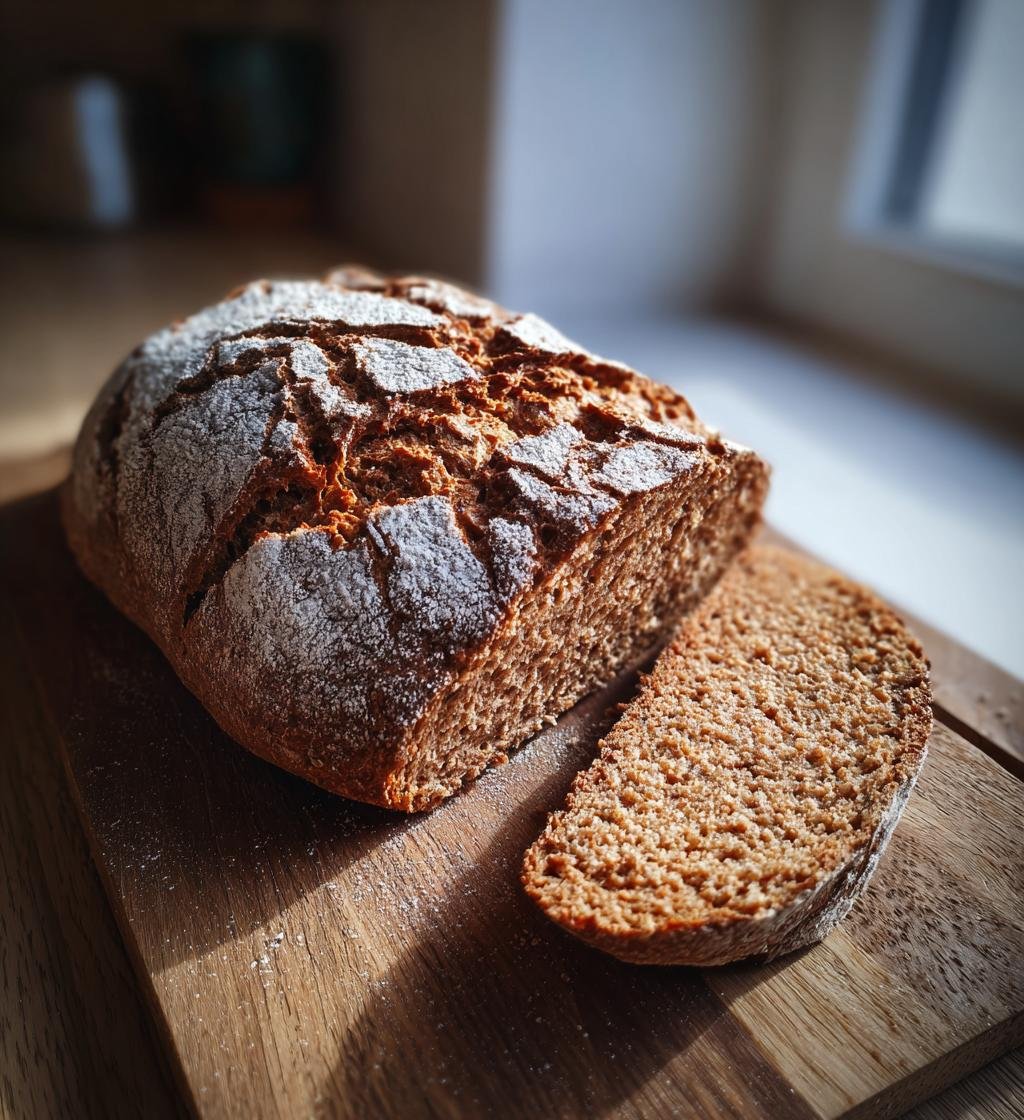
There’s something magical about pulling a loaf of homemade bread from the oven—the crackling crust, that warm, earthy smell filling your kitchen. My healthy easy wholegrain rye bread recipe brings that magic to your home with just five simple ingredients and almost no fuss. Rye flour packs way more fiber and nutrients than regular wheat, giving you that hearty, nutty flavor I crave in good bread. And trust me, this isn’t one of those finicky bread recipes—no complicated steps, no fancy equipment. Just mix, knead, and bake. In about two hours, you’ll have a loaf that’s perfect for sandwiches, toast, or just tearing off chunks straight from the cutting board.
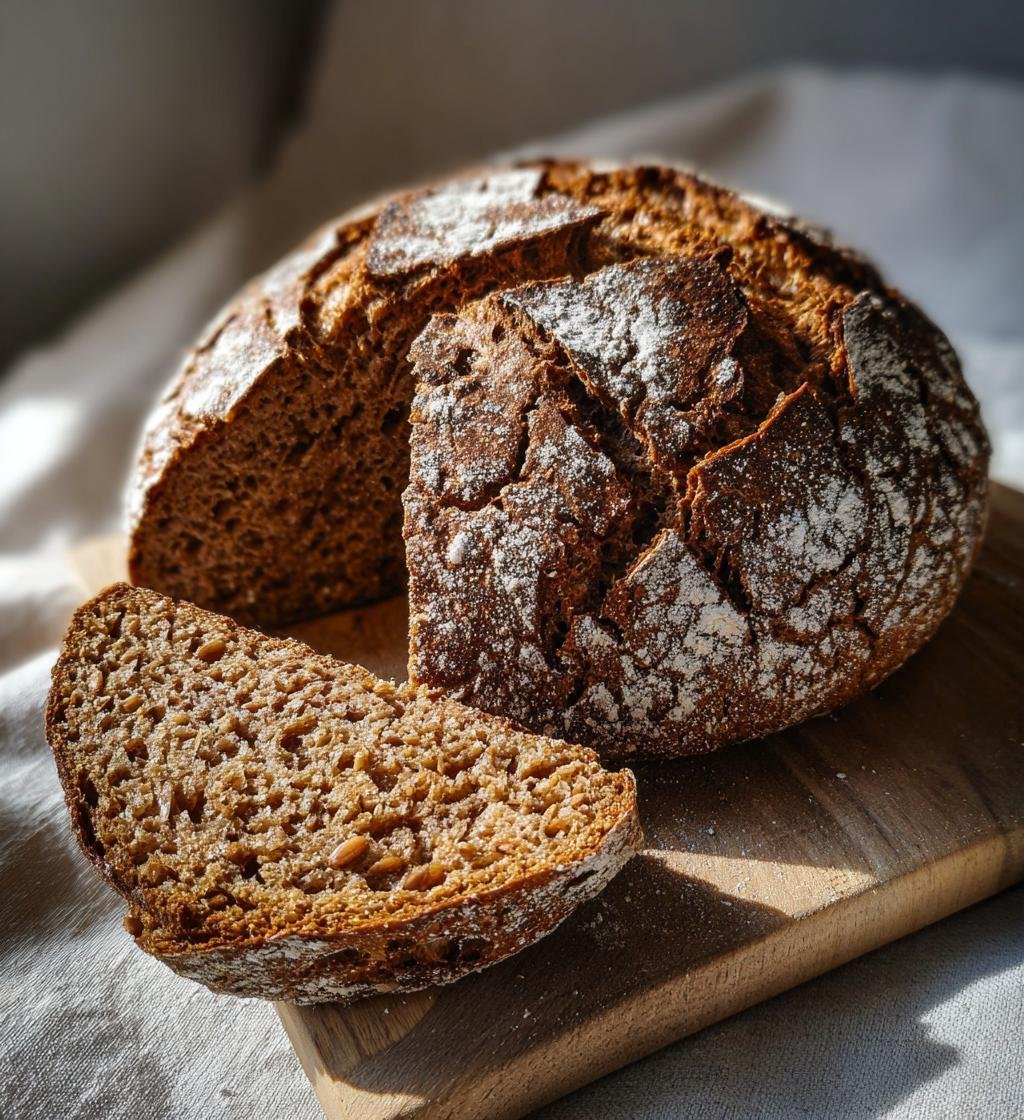
Why You’ll Love This Healthy Easy Wholegrain Rye Bread
This bread honestly feels like a little miracle every time I make it. You’ll love it because:
- It’s so simple: Just five basic ingredients and one bowl. No tricky techniques!
- It’s genuinely good for you: Packed with fiber and whole grains to keep you full and energized.
- It’s incredibly versatile: Perfect for avocado toast, a hearty sandwich, or just slathered with a little butter.
It’s the kind of bread that makes you feel like a superstar baker with minimal effort.
Ingredients for Healthy Easy Wholegrain Rye Bread
Here’s the beautiful simplicity of this recipe – just five ingredients you probably have right now:
- 500g wholegrain rye flour – Don’t even think about sifting it! We want all that good, hearty bran.
- 350ml water – Lukewarm is perfect, like a cozy bath for your yeast.
- 10g salt – Trust me, this makes all the difference in bringing out rye’s nutty flavor.
- 7g instant yeast – One little packet works magic.
- 1 tbsp honey (optional) – My little trick to balance rye’s earthiness, but skip it if you like.
See? Nothing fancy, just real food turning into real bread.
How to Make Healthy Easy Wholegrain Rye Bread
I love how straightforward this process is – no complicated steps, just good old-fashioned bread making at its simplest. Here’s exactly how I do it every time:
Mixing the Dough
First, grab your biggest mixing bowl – rye flour can be messy! Dump in the flour, salt, and yeast, giving them a quick whisk to get acquainted. Then pour in your lukewarm water (and honey if you’re using it) all at once. Now comes the fun part – get your hands in there and mix until you can’t see any dry flour patches. The dough will look shaggy at first – that’s perfect!
Kneading and Rising
Turn your shaggy dough onto a lightly floured surface. Here’s my trick: knead it like you’re gently massaging a cat’s ears – firm but not aggressive. After about 5-7 minutes, you’ll feel it transform into this smooth, slightly tacky (not sticky!) dough. Pop it back in the bowl, cover with a damp towel, and let it rise in a warm spot for 1 hour. I like to use my oven with just the light on – creates the perfect cozy environment.
Baking the Bread
While your dough rises, preheat your oven to 200°C (390°F). When the dough has doubled (it won’t rise as dramatically as wheat bread – that’s normal!), gently shape it into a round loaf on a parchment-lined tray. No fancy shaping needed – rustic is beautiful here! Bake for 40 minutes until the crust is deep golden and sounds hollow when tapped. That heavenly rye aroma will tell you it’s ready before the timer does!
Tips for Perfect Healthy Easy Wholegrain Rye Bread
After making this bread more times than I can count, here are my absolute can’t-skip tips:
- Water temperature matters: Too hot kills yeast, too cold slows rising. Aim for wrist-temperature – if it feels neutral on your skin, it’s perfect.
- Watch the dough, not the clock: Rye rises differently than wheat. If your kitchen’s chilly, give it extra time until truly puffy.
- Slice patience: I know it’s tempting, but waiting until completely cool prevents gummy crumbs. Worth the wait!
These little tricks make all the difference between good bread and great bread.
Ingredient Substitutions and Notes
Listen, I get it – sometimes you’re halfway through a recipe and realize you’re out of something! Here’s what you can (and can’t) swap in this bread:
- Honey alternatives: Maple syrup or agave work beautifully if you want to keep it vegan. Even a teaspoon of sugar will do in a pinch!
- Flour warning: Don’t try substituting regular wheat flour – rye behaves completely differently. If you must, use at least 50% rye flour to keep that signature texture.
- Yeast note: Active dry yeast works too – just activate it in the water first for 5 minutes until frothy.
The salt and water? Those are non-negotiable – they’re the backbone of this recipe!
Serving and Storing Healthy Easy Wholegrain Rye Bread
Oh, the possibilities with this bread! My absolute favorite way to enjoy it is still warm from the oven with a thick smear of butter that melts into all those nooks and crannies. It’s magical with hearty soups – think creamy mushroom or beet borscht – or topped with avocado and everything bagel seasoning for the ultimate breakfast. For the ultimate breakfast, try pairing it with a power bowl!
To keep it fresh, tuck the cooled loaf into an airtight container or bread bag. It’ll stay delicious for about 5 days (if it lasts that long!). If it starts getting stale, don’t panic – just toast slices or revive the whole loaf by wrapping it in foil and warming at 180°C (350°F) for 10 minutes. The crust will crisp right back up!
Nutritional Information
Just so you know, these numbers are estimates – but here’s why I love this bread nutritionally (per 50g slice):
- 120 calories – Satisfying without being heavy
- 4g fiber – That’s 16% of your daily needs in one slice!
- 4g protein – Nice little plant-based boost
Plus, it’s got all the good stuff from whole rye grains – minerals, antioxidants, you name it. Guilt-free deliciousness! Understanding the nutritional benefits of whole grains like rye is key to healthy eating.
Frequently Asked Questions
Q1. Can I make this rye bread with sourdough starter instead of yeast?
Absolutely! Replace the instant yeast with 150g of active sourdough starter and reduce the water by 50ml. The rising time will be longer – usually 4-6 hours depending on your starter’s strength. The flavor becomes even more complex and delicious!
Q2. Why is my rye bread so dense?
Don’t worry – rye bread is naturally denser than wheat bread! But if it’s like a brick, you might have used too much flour or not enough water. Next time, aim for dough that’s tacky but not sticky. Also, resist the urge to over-knead – rye needs gentler handling. If you are interested in learning more about bread science, check out resources on how yeast functions in baking.
Q3. Can I add seeds or nuts to this recipe?
Oh yes – I love tossing in a handful of sunflower seeds or chopped walnuts! Add up to 100g of extras when mixing the dough. My favorite combo is caraway seeds (about 1 tbsp) for that classic rye flavor.
Q4. How do I know when the bread is fully baked?
The crust should be deep golden brown, and when you tap the bottom, it should sound hollow. If you’re unsure, an instant-read thermometer should show about 95°C (203°F) in the center.
Share Your Results!
I’d love to see your beautiful loaves! Drop a comment below or tag me on social when you bake this rye bread – nothing makes me happier than seeing your kitchen successes. Did you add any fun twists? Let’s swap bread stories!
Print
5-Ingredient Healthy Easy Wholegrain Rye Bread Recipe You’ll Crave
- Total Time: 1 hour 55 minutes
- Yield: 1 loaf
- Diet: Vegetarian
Description
A simple and healthy wholegrain rye bread recipe that’s easy to make at home.
Ingredients
- 500g wholegrain rye flour
- 350ml water
- 10g salt
- 7g instant yeast
- 1 tbsp honey (optional)
Instructions
- Mix flour, salt, and yeast in a large bowl.
- Add water and honey, then stir until combined.
- Knead the dough for 5-7 minutes until smooth.
- Cover and let rise for 1 hour.
- Shape into a loaf and place on a baking tray.
- Bake at 200°C (390°F) for 40 minutes.
- Cool before slicing.
Notes
- Store in an airtight container for up to 5 days.
- For a denser texture, reduce water by 20ml.
- Prep Time: 15 minutes
- Cook Time: 40 minutes
- Category: Bread
- Method: Baking
- Cuisine: European